Kitchen Credentials: Handler vs. Manager

Erin Vita • April 7, 2026

Share this article

Kitchen Credentials: Food Handler vs. Food Manager in Indiana


If you’re looking to break into the Indiana food scene—or you're a seasoned pro moving up the ranks—you’ve likely heard about "Food Safety Certifications." But here’s where it gets confusing: Indiana has specific rules that distinguish a Food Handler from a Food Manager.


Choosing the wrong one can lead to wasted time and money, or worse, a visit from the health inspector that doesn't go so well. Let’s break down the differences so you can get the right credentials for your role.


1. The Basics: Who is who?

Feature Food Handler Certificate Food Manager Certification (CFPM)
Who it's for Line-level staff (servers, cooks, dishwashers) Owners, managers, chefs, and "Persons-in-Charge"
Focus Basic safety; handwashing, cross-contamination, personal hygiene Management: HACCP plans, regulations, pathogens
Indiana Law Required for home-based vendors and often required by company standards Legally required for retail food establishments
Validity 3 years 5 years

2. The Food Handler Certificate: The Entry Level


Think of the Food Handler Certificate as your "learner’s permit" for the kitchen. It proves you understand the fundamentals of not making people sick.


  • What you learn: Personal hygiene, proper refrigerator storage, and how to avoid cross-contamination.


  • The Exam: Usually a short online course (3 hours) followed by a simple quiz.


  • Is it required in Indiana? State law does not mandate every single employee have this certificate. However, if you are a home-based vendor, it is required. Some corporate employers require it as a condition of employment.


3. The Food Manager Certificate: The Legal Requirement


In Indiana, this is officially known as the Certified Food Protection Manager (CFPM). Under Indiana Code 410 IAC 7-22, most food establishments must have at least one certified manager on staff.


  • What you learn: This is a deep dive. You’ll cover the Big 6 pathogens, cooking temperatures, allergens, pest management, and how to create a food safety culture among your staff.


  • The Exam: This is a proctored, 90 question exam. You can't just "wing it" at home; you need a registered proctor to oversee the test.


  • The Rule: Indiana requires one person in a position of authority on staff to be certified.

4. Key Differences in Indiana Law


  • The 6-Month Grace Period: New establishments in Indiana have 6 months from opening to ensure they have a certified manager.


  • The 90-Day Vacancy Rule: If your only certified manager quits, Indiana law gives you 90 days to get a new person certified.


  • Exemptions: Not everyone needs a manager. If you only sell pre-packaged foods (like a gas station with only bagged snacks) or low-risk items (like a coffee shop that doesn't serve "time-temperature control" foods), you might be exempt.

Which one do you need?


Rule of Thumb: If you are responsible for the kitchen, the schedule, or the health inspection, you need the Food Manager Certification. If you are a home-based vendor selling cookies, breads and such at a farmer’s market, the Food Handler Certificate is your best bet.


Ready to get certified?  Click here to sign up for one of our certification classes!

Recent Posts

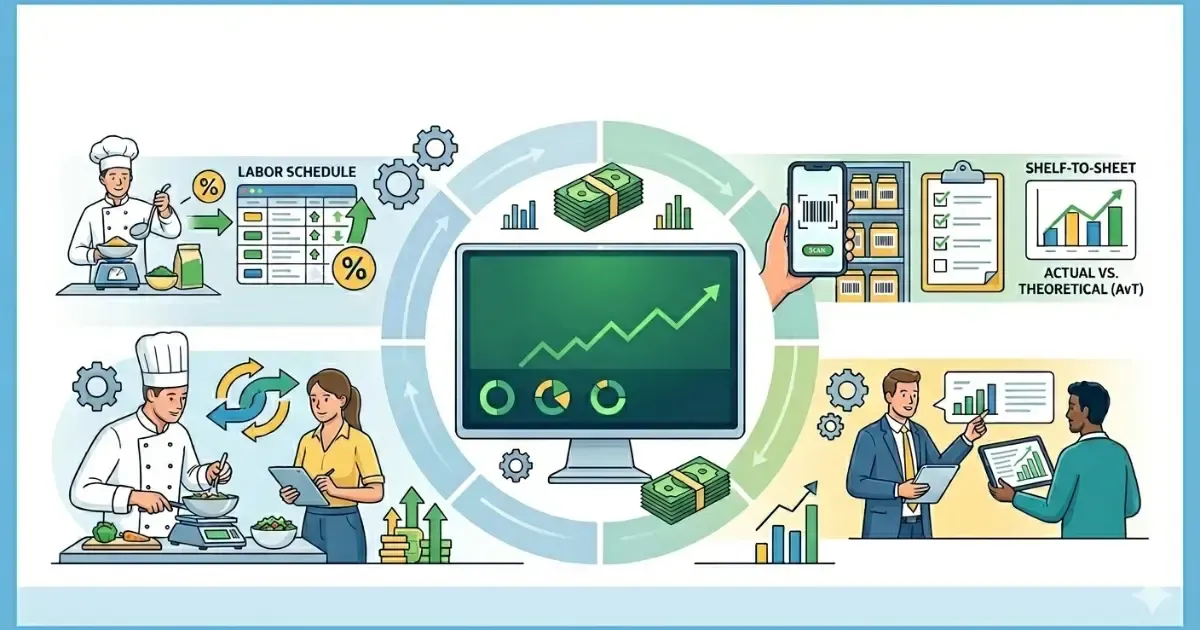
Workflow showing restaurant operations and financial growth, with chefs, data, and money.
By Don Vita March 2, 2026
Master the business side of food service. Learn how cost control, inventory systems, and expert coaching can transform your restaurant into a profitable powerhouse.
Man in suit using a holographic interface to analyze food truck operations. Several staff and a customer are present.
By Don Vita February 2, 2026
Boost profits and streamline your operations. Learn why a hospitality consultant is the secret ingredient for success in restaurants, food trucks, and catering
Chefs serving food at a community event; crowd watches. Street food table with a roasted ham and plates of food.
By Erin Vita January 14, 2026
Boost guest loyalty and your bottom line! Discover why community involvement is a vital 'bonus' for successful restaurants and how to build a brand locals love.
Chefs in a kitchen viewing a tablet, pointing. Display of hot sauces. Brightly lit, stainless steel.
By Don Vita December 30, 2025
Boost restaurant profitability despite rising costs. Learn how to protect your margins using menu engineering, inventory control, and strategic labor management.
Woman with arms crossed, in front of a red food truck with a
By Don Vita December 4, 2025
Opening a restaurant? Avoid costly startup mistakes. Learn the crucial steps for licensing, financial planning, and food safety before you launch your business.

Two men at a hotel desk transitioning to a smart hotel room.
By Erin Vita November 25, 2025
Technology is transforming hospitality. Optimize operations, enhance the guest experience with mobile check-in and IoT, and use data analytics for revenue growth.
Chefs in white coats and hairnets plating food in a commercial kitchen, one using a tablet.
By Don Vita November 4, 2025
Protect guests & your business. Master mandatory food allergy protocols, cross-contact prevention, and staff training for safety in your food service establishment.
Food delivery app: Chef prepares food, phone shows app interface, delivery truck with rising profit.
By Don Vita November 4, 2025
Learn how food service can use DoorDash as a strategic revenue stream. Learn tips for optimizing menus, managing commissions, and boosting delivery sales for profit.
Left: Chef stressed in kitchen  Right: Chefs smiling, reviewing data
By Don Vita November 4, 2025
Learn how smart training is the key to reducing employee turnover in food service. Cut hidden costs, boost staff confidence, and build a stable, profitable team.
Rows of shelves in a unorganized storage room.
By Don Vita November 4, 2025
Uncover hidden profits! Learn how consistent weekly inventory control in food service drastically reduces waste, sharpens food cost percentage, and combats shrinkage.
Show More